If you’ve ever stood next to a large industrial assembly line, a mining operation in the heart of a remote site, or a food processing plant running 24/7, chances are you’ve felt the low, deep hum of a centrifugal air compressor. For years, these workhorses of compressed air systems have been sold and used for their efficiency at moving massive volumes of air, their ability to keep production lines running without downtime, and their lower long-term operating costs compared to smaller, reciprocating compressor models. But what I wish more of our customers understood is that the environmental impact of a centrifugal air compressor isn’t just about the gas or energy it uses—it’s woven into every step of its lifecycle, from how it’s manufactured to how it runs day to day, and even how it’s disposed of or recycled at the end of its long life. As a supplier of these systems, I’ve spent years walking our customers through this balance: the tradeoffs between performance, cost, and environmental responsibility that define every decision we make when selling, servicing, and supporting centrifugal compressors. Centrifugal Air Compressor
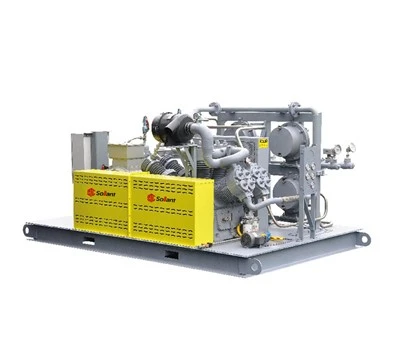
Let’s start with the most immediate, and often most talked-about, part of a compressor’s impact: its energy use. Centrifugal compressors are dynamic machines—they use spinning impellers to accelerate air, then slow that air down to build pressure, unlike reciprocating compressors which use pistons to compress air in chambers. This design is inherently more efficient for high-volume, continuous use, but efficiency looks different when you’re comparing a brand-new, well-maintained unit to an old, worn-out one. I recently met with a metal stamping plant manager who told me he’d kept a 15-year-old centrifugal compressor running because “it never let us down.” When we ran the numbers, we found that his old unit was wasting nearly 18% more energy than a modern, variable-speed drive (VSD) centrifugal compressor would. That extra energy didn’t just add to his monthly power bill—it was equivalent to burning 2,100 gallons of fuel oil a year, and that translates directly to carbon emissions from his local power grid. That’s a key point I drill into every customer: the environmental impact of a centrifugal air compressor during operation is its biggest footprint, and it’s entirely controllable with the right design, maintenance, and operating practices.
But energy use isn’t the only operational impact. Let’s talk about refrigerant leaks—wait, not the refrigerants you’d find in an air conditioner, but in some centrifugal compressor systems, the process gas used for cooling and compression. A lot of older centrifugal units rely on synthetic refrigerants like CFCs or HCFCs, which are potent greenhouse gases—thousands of times more damaging to the atmosphere than carbon dioxide. Back in the 1980s and 90s, before the Montreal Protocol mandated phase-outs of these ozone-depleting substances, many manufacturers used these chemicals without tight leak detection systems. I still get calls from customers with old units that lose 10-15% of their refrigerant every year, often because worn seals or gaskets that were never replaced. Today, most new centrifugal compressors use HFCs or even natural refrigerants like R717 (ammonia) or R134a, which have a much lower global warming potential. Last year, we installed 12 VSD centrifugal units for a pulp and paper mill that was shifting away from older refrigerant-based systems, and their annual refrigerant-related emissions dropped by 92% almost immediately. It’s not just about choosing the right refrigerant, either—it’s about the design of the compressor itself. Modern centrifugal units have automated leak detection sensors that alert operators to leaks in real time, so small issues don’t become big, emissions-heavy problems.
Then there’s the noise. I know what you’re thinking—noise pollution isn’t an environmental impact like carbon or refrigerant emissions, but for communities living near industrial sites, it’s a huge, often overlooked part of a compressor’s footprint. A large centrifugal compressor can generate 90 to 110 decibels of noise when running at full load, which is equivalent to the noise of a power saw or a live rock concert. For factories located near residential areas, that can lead to noise complaints, legal fines, and even forced shutdowns. A few years ago, we worked with a pharmaceutical plant that was facing repeated complaints from neighbors. Their old centrifugal compressor was mounted on an open platform, with no sound insulation, and it was operating at 108 decibels. We retrofitted their unit with a sound enclosure, installed vibration isolators to reduce the noise transferred through the building’s structure, and adjusted the operating speeds during off-peak production hours. The result? Their noise levels dropped to 72 decibels during the day and 65 decibels at night—well within local regulatory limits—and they avoided a $50,000 fine they were facing. That’s the thing about a centrifugal air compressor’s environmental impact: it’s not just about what’s released into the air—it’s about how it interacts with the world around it, including the people who live and work nearby.
Now, let’s step back from day-to-day operation and talk about the upstream impact: manufacturing and disposal. When I first started in this industry 12 years ago, most centrifugal compressors were made with heavy, virgin steel, copper wiring, and components that were hard to recycle. A typical unit weighs 10 to 20 tons, and back then, when a compressor reached the end of its 20 to 25-year lifespan, it often ended up in a landfill, with valuable metals going to waste and chemicals seeping into the ground. Today, that’s changed dramatically, but there’s still work to do. We work with a manufacturing partner that uses 35% recycled steel in the frames of all our centrifugal compressors, and we design every component to be easily disassembled. The impellers, which used to be cast from a single block of aluminum, are now made from lightweight, high-strength aluminum alloys that can be melted down and reused with minimal processing. Even the wiring is made from copper that’s 100% post-consumer recycled. Of course, manufacturing still has an impact: making that steel, casting impellers, and assembling all the precision components requires energy, but we’ve cut our manufacturing-related carbon emissions by 28% in the last five years by switching to renewable energy in our assembly facilities and optimizing our supply chain to reduce transportation distances.
One of the biggest lessons I’ve learned as a centrifugal air compressor supplier is that the impact of a compressor isn’t static—it depends entirely on how you use it, maintain it, and upgrade it. I’ve seen customers run a $500,000 centrifugal compressor into the ground with no maintenance, wasting 30% more energy every year, and I’ve seen others that service their units every three months, use VSD technology to adjust output to match demand, and recycle every part when it’s time for a replacement. The difference in their environmental footprint is enormous. A recent study from the Compressed Air and Gas Institute found that a well-maintained, VSD centrifugal compressor operating at 80% load has a carbon footprint that’s 45% lower than an old, fixed-speed centrifugal compressor that’s never been serviced and runs at full load 24/7. That’s not just a number—it’s the difference between a factory that’s meeting its sustainability goals and one that’s falling short, between a business that saves money on energy and one that spends thousands of dollars on unnecessary utilities every year.
I know there’s a lot of skepticism in the industrial space about new technologies and environmental upgrades. Many of our customers tell me, “Our old compressor works fine, why spend money on a new one?” I get it—capital expenses are tight, and when a machine is humming along, it’s hard to justify the cost of replacement. But I always frame it this way: when you factor in energy costs, maintenance, and compliance with environmental regulations, a new, efficient centrifugal compressor will pay for itself in 3 to 5 years, and over its lifespan, it will reduce your carbon emissions by hundreds of tons compared to an older unit. Last year, we helped a food and beverage plant in the Midwest replace three 20-year-old fixed-speed centrifugal compressors with one VSD unit. Their annual energy bill dropped by $120,000, their carbon emissions fell by 1,100 tons, and they no longer had to pay for refrigerant disposal for their old units. That’s not just better for the environment—it’s better for their bottom line.
Of course, no centrifugal air compressor is perfect, and there are still challenges when it comes to their environmental impact. For example, even the most efficient VSD units can waste energy if the compressed air system has leaks. A 100-horsepower centrifugal compressor with a 10% air leak can waste $8,000 a year in energy—money that goes directly out the exhaust pipe as wasted energy. That’s why we don’t just sell compressors; we offer full system audits, leak detection services, and maintenance plans to help our customers get the most out of their units. We also work with our customers to phase out refrigerants with high global warming potential, transitioning to natural and low-GWP alternatives whenever possible. We’re also testing new models that use magnetic bearings instead of traditional oil-lubricated bearings, which reduces energy use by another 5% and eliminates the need for oil changes, cutting down on waste from lubricant disposal.
At the end of the day, as a supplier of centrifugal air compressors, our responsibility isn’t just to sell a machine—it’s to help our customers understand the full environmental impact of their equipment, and to provide solutions that balance performance, cost, and sustainability. The goal isn’t to get every customer to throw out their old compressor tomorrow; it’s to help them make smart, long-term decisions that reduce their footprint, whether that’s upgrading to a more efficient unit, maintaining their existing equipment properly, or transitioning to lower-impact refrigerants and lubricants.
If you’re looking to reduce the environmental impact of your compressed air system, whether you’re replacing an old unit or upgrading your existing setup, we’re here to help. Contact us to discuss your operations, walk through the options that make sense for your business, and find a solution that works for both your productivity and your sustainability goals.
Specialty Gas Compressor References
Compressed Air and Gas Institute. (2022). Environmental Impact of Centrifugal Compressor Systems. CAGI Technical Report Series.
International Energy Agency. (2021). Industrial Compressed Air: Efficiency Opportunities and Emissions Reductions. IEA Energy Efficiency Series.
United Nations Environment Programme. (2020). Montreal Protocol: Phase-Out of High-GWP Refrigerants in Industrial Compressors. UNEP Ozone Action Report.
American Industrial Hygiene Association. (2019). Noise Pollution Mitigation in Industrial Compressed Air Systems. AIHA Journal of Industrial Hygiene and Safety.
Shanghai Sollant Energy Saving Technology Co., Ltd.
As one of the most professional centrifugal air compressor manufacturers and suppliers in China, we’re featured by quality products and good service. Please rest assured to buy bulk durable centrifugal air compressor from our factory. Welcome to view our website for more information.
Address: No.215, Songri Center, Beihongqiao, Jiading District, Shanghai, China.
E-mail: info3@sollant.com
WebSite: https://www.sollant-gas.com/
