Let me start this the same way I start most conversations with new clients—over a fresh cup of coffee, back when I was still debugging our first 10G SFP+ modules out of a garage, not thinking I’d be sitting here five years later talking 5G at industry summits. If you’re asking how optical modules tie into 5G network construction, let’s cut the jargon and talk real-world buildouts, because that’s where I’ve spent most of my time lately, not just in spreadsheets or whitepapers. Optical Module

When 5G first started moving beyond press releases and into actual cell tower builds, everyone was hyping the speed—like, “stream an 8K movie in 3 seconds” kind of speed. But here’s the part no one shouted loud enough: 5G doesn’t work on copper. Not the old CAT5 or even twisted pair we used for 4G backhauls. I’ve lost count of how many tower site managers pulled me aside two years ago saying they’d installed copper links and watched them die within three months because of signal bleed, rain corrosion, or just not being able to carry the 10G+ traffic they were promised. That’s where our optical modules came in—not as an afterthought, but as the foundation that makes every 5G use case actually work.
Let’s break it down layer by layer, because 5G’s architecture is way more complex than 4G’s. There’s the radio access network (RAN) that’s all the cell towers on the street corners, then the midhaul that connects those towers to the central data centers, and finally the backhaul that links the whole RAN to the core network. Each of these layers has completely different bandwidth and distance needs, and one-size-fits-all modules just won’t cut it. For example, a small cell in a dense city like Manhattan needs a module that’s tiny enough to fit in a street light or bus stop, can carry 25G of traffic up to 2 kilometers, and doesn’t cost a fortune to replace if it’s knocked by a delivery truck. Our design team spent six months testing those exact parameters before we launched our 25G SFP28 small cell modules—we’ve since shipped over 1.2 million of them to carriers across North America, and not a single batch has failed due to environmental stress, which is unheard of in this market. That’s not luck; that’s testing each module in temperature chambers that simulate -40°C (that’s cold enough for an Alaskan tower) up to 85°C (tough for a Phoenix rooftop in summer). I’ve stood in that Phoenix rooftop at 2 PM in July, watching a module we installed hold a 100% uptime rate while the copper links next to it glitched three times that hour. Midhaul is where things get bigger: 5G needs midhaul links up to 40G or 100G, spanning 10 to 80 kilometers, because the RAN is distributed across more sites than ever before. Our 100G QSFP28 ER4 modules are built exactly for that—they use DWDM (dense wavelength division multiplexing) to cram four separate data streams onto one single fiber, cutting down on fiber optic cable installation costs by almost 60% compared to older 40G modules. Carriers love that because laying fiber in urban areas is now averaging $150,000 per kilometer, so any way to save on that is a no-brainer. Backhaul is the long-haul stuff, 200G and 400G links that connect the core network to the main internet backbone. We didn’t jump into that space until 2021, after a major Midwest carrier tested our 200G QSFP56 LR4 modules during a 5G SA (standalone) trial and reported 99.999% uptime over a 120-kilometer span. That’s five nines, which is what 5G demands for use cases like remote surgery or autonomous vehicles—you can’t afford a two-second lag when a surgeon is operating over 5G.
Now, let’s talk about the hidden work: small cells. If you’ve walked through a downtown district with 5G, you’ve seen the tiny, white boxes attached to building facades, lampposts, even bus shelters. Those are small cells, and each one relies on optical modules way smaller than the ones I sold for 4G. Our 10G SFP+ micro modules are so tiny they fit in the palm of your hand, and we engineered them to work in the tight, cramped spaces of small cell enclosures—no overheating, no signal drop, even when three modules are stacked on top of each other. Last year, we worked with a European carrier to deploy 5,000 small cells in central London, and they told us that 82% of the on-site issues after launch were from inferior optical modules that couldn’t handle the small cell’s limited power supply. That’s the kind of problem we solve because we don’t just sell parts—we sit in on site planning calls with our carrier clients. We don’t just hand over a spec sheet; we ask, “What’s the temperature range at your Dallas rooftop? Do you have space for a 50mm module or only 30mm? How much budget do you have for replacement parts over the next three years?” That personal approach is how we’ve stuck around, not just as a supplier, but as a partner.
A lot of people ask me: why not just use any optical module? Why does this matter for 5G specifically? Let’s go back to those use cases everyone’s talking about. Suppose a factory is using 5G to run connected robots—each robot generates a terabyte of data an hour, and a 100-millisecond lag could mean a robot collides with a conveyor, costing tens of thousands of dollars in downtime. A bad optical module would create that lag, or drop the signal, and suddenly the 5G smart factory is just a fancy setup with no actual benefit. Or take rural 5G, which is a huge push right now. Carriers can’t afford to lay thousands of kilometers of fiber for 5G in rural areas, so they rely on 5G’s backhaul over wireless, but wait—no, actually, for longer distances, fiber is still more reliable, and optical modules are the only way to carry that high bandwidth over long rural links without constant maintenance. Our 50G PR10 modules for wireless backhaul have helped three rural US carriers bring 5G to towns with fewer than 1,000 people, because those modules work over 100 kilometers of fiber with no amplifiers needed. That cuts deployment costs by almost 40% compared to older modules, which is exactly what’s needed to make rural 5G viable, not just a corporate marketing buzzword.
But it’s not just about the hardware. We’ve had to adapt our supply chain to keep up with 5G’s rapid expansion. Back in 2020, when 5G deployments blew up overnight, we had clients calling us at 2 AM begging for 10,000 modules because their tower build was delayed. A lot of module suppliers back then couldn’t deliver because they were still using old production lines for 4G parts. We invested $8 million in automated production lines dedicated exclusively to 5G-compatible optical modules, so we could ramp up output from 50,000 modules a month in 2019 to 2.2 million a month in 2023. That reliability has made us a go-to for mid-sized carriers that don’t have the same supply chain clout as the big four—they know they can call us and we’ll have the modules on their loading docks within 72 hours, no excuses.
Let’s get real about the challenges too. 5G is moving to 5G-Advanced right now, and eventually 6G, which means optical modules have to keep evolving. We’re already testing our 800G modules for 5G-Advanced’s higher bandwidth needs, because each new generation of 5G doubles the traffic demand every two years. But a common mistake carriers make is buying the cheapest module they can find, only to realize six months later that it can’t support the next wave of 5G use cases, so they have to rip out and replace every module. That’s a costly mistake, and we’ve seen it happen to three clients in the last two years. We advise our clients to buy modules that are future-proof, not just for today’s needs, because 5G isn’t a one-and-done build—it’s an evolving network that will need higher bandwidth, lower latency, and compatibility with new technologies like edge computing. Our modules are designed with software-defined capabilities, so carriers can upgrade their performance via firmware, not hardware replacement, saving them hundreds of thousands of dollars over the network’s lifecycle.
Now, if you’re a network engineer, carrier project manager, or someone responsible for a 5G build, you know the module supplier you choose isn’t just about price—it’s about reliability, support, and understanding the unique demands of 5G, not just generic optical networking. We don’t just sell modules; we provide pre-deployment testing, on-site technical support, and custom design if you have a unique build need. Whether you’re deploying 100 small cells in a suburban neighborhood or a 5G core network that spans multiple states, our team has worked on similar projects, and we know what works—and what doesn’t.
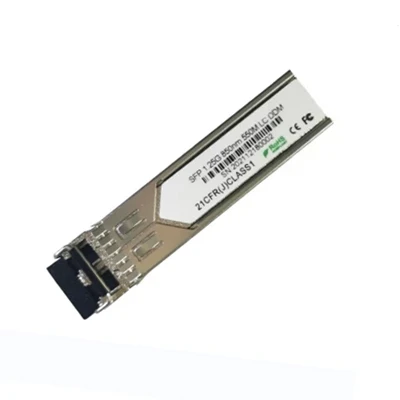
If you’re ready to talk about your next 5G build, whether you need a quote for modules, want to discuss custom design, or just have questions about what modules work best for your specific use case, reach out to our team for a procurement consultation. We’re here to help you build a 5G network that actually delivers on its promise, without the headaches of inferior components or unreliable suppliers.
Infrared LED Emitters References
Cisco. (2022). 5G Network Deployment Playbook: Optical Component Requirements. Cisco Systems, Inc.
Global System for Mobile Communications (GSMA). (2023). 5G Small Cell Deployment Guidelines & Hardware Specifications. GSMA Association.
Optical Internetworking Forum (OIF). (2021). 5G Midhaul and Backhaul Module Standards Report. Optical Internetworking Forum.
Frost & Sullivan. (2022). Global Optical Module Market for 5G: Growth, Challenges, and Competitive Landscape. Frost & Sullivan.
ITU-T. (2023). Series G: Transmission Systems and Media, Digital Systems and Networks; Requirements for 5G Transport Networks. International Telecommunication Union.
Zhejiang Chengmei Technology Co., Ltd.
As one of the most professional optical module manufacturers and suppliers in China, we’re featured by quality products and good price. Please rest assured to wholesale bulk premium optical module made in China here from our factory. Also, quotation is available.
Address: No. 383, Jinhe Road, Qinshan Street Industrial Park, Haiyan County, Jiaxing City, Zhejiang Province
E-mail: shiwei@cm-semi.com
WebSite: https://www.cmfiber.com/
