If you’ve spent any time in the home battery storage space over the last five years, you’ve probably noticed how quickly regulations around this technology shift. When I started our home battery storage company back in 2018, I thought the rules would be straightforward—something we could build around and explain to customers without too much confusion. How wrong I was. Over the past six years, we’ve worked with thousands of homeowners, installers, and utility partners, and the one thing I’ve learned is that regulatory requirements for home batteries aren’t just red tape—they’re there to keep people safe, protect the grid, and ensure this technology lives up to its promise of making energy more accessible for everyone. Home Battery Storage
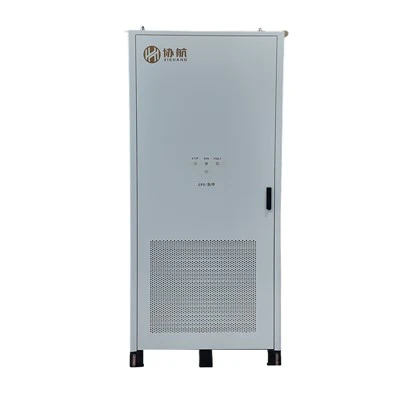
Let me start by saying this: I don’t blame customers for feeling overwhelmed. A few years ago, a homeowner in Ohio reached out to us after a botched battery installation left their garage flooded. The installer they’d hired hadn’t bothered to check local fire codes, and the battery’s ventilation system was incorrectly routed into the living space. It’s a nightmare story, and it’s exactly why we now build our entire compliance process around these rules—not just to check boxes, but to protect the people who rely on our batteries. That incident stuck with me, so I want to break down the key regulatory requirements that matter for homeowners, installers, and suppliers like us, with real-world context that doesn’t read like a textbook.
First, there’s product safety certification, and this is non-negotiable. For any home battery to even make it to a customer’s doorstep, it has to meet national and international safety standards. In the U.S., that means UL 9540, which covers energy storage systems, including thermal and electrical safety, fire resistance, and structural integrity. More recently, UL 9540A has become critical—it’s the standard for testing thermal runaway propagation, meaning if one cell in the battery overheats, the system can’t catch fire or trigger other cells to fail. I’ve seen too many uncertified batteries (often imported cheaply) skip these tests, and that’s a risk no homeowner should take. In the EU, it’s CE marking, specifically aligned with the ESS (Energy Storage Systems) standard EN 62619, which covers everything from cell chemistry to system reliability. Even in Australia, where our batteries are also used, there’s the AS/NZS 5131 standard, which focuses on installation safety for residential systems. We test every single battery unit we produce against these standards in our in-house lab before it leaves our warehouse. Last year, we caught a batch of 12 batteries that had a minor flaw in their thermal sensors—we recalled them before they shipped, and it cost us a lot of time and money, but it’s the right call. Product safety isn’t something to cut corners on, it’s the foundation of this business.
Next, installation and wiring codes, which vary by location but have core consistency across most regions. In the U.S., that means following the National Electrical Code (NEC), specifically Article 706, which covers energy storage systems. NEC 706 sets rules for everything from how batteries are grounded (to prevent electric shock) to their placement—for example, they can’t be installed in closets or near open flames unless there’s proper ventilation. I remember working with an installer in Texas last year who tried to install a battery in a small utility closet in a home built in the 1950s. They thought it was a good use of space, but NEC 706 requires a 3-foot clearance around batteries for maintenance and fire access, and that closet didn’t meet the mark. We had to adjust the layout, and the homeowner was glad we caught it. In the UK, it’s the IET Wiring Regulations (BS 7671), which require installers to notify the local network operator before installing a battery, and ensure the system has a “disconnect” switch that works in case of emergency. One thing that’s often overlooked is interconnection rules—those are the rules that govern how a home battery talks to the grid. Utilities have to approve every new connection, and they’re increasingly requiring batteries to have grid support features, like frequency response, which means the battery can adjust its charging or discharging to help stabilize the grid if there’s a spike in demand. In California, for example, Rule 21 governs grid interconnection for distributed energy resources, and we’ve had to update our battery software twice in the last three years to meet new versions of this rule. It’s frustrating at times, but it’s necessary to ensure the grid doesn’t get overwhelmed when thousands of home batteries are operating at the same time.
Fire safety codes are another big one, especially as more and more home batteries are installed. Local fire departments across the country are updating their requirements because batteries are a relatively new technology, and first responders need clear guidelines on how to handle incidents. For example, in many U.S. states, fire codes require home batteries to have a remote disconnect feature so firefighters can shut off power quickly if there’s an issue. Some areas also require batteries to be installed with a fire-resistant barrier between the battery and the home’s structure, especially if it’s installed on an exterior wall. A few months ago, we got a call from a firefighter in Florida who told us that a battery fire in a nearby home could have been worse if the system hadn’t had the remote disconnect. That’s the kind of story that makes the extra work we put into meeting these codes worth it. In Europe, the European Fire Commission has updated guidelines for energy storage, emphasizing proper ventilation and regular maintenance checks, which we now include in every customer’s warranty. We also provide our installers with a step-by-step fire safety guide, so they know exactly what to do if there’s an emergency, both during installation and after the system is up and running.
Then there are emerging regulations around environmental impact and battery end-of-life. This is a topic that’s not as talked about as safety, but it’s becoming increasingly important as more home batteries reach the end of their 10 to 15-year lifespan. In the EU, the Battery Regulation (which went into effect in 2024) requires all home batteries sold there to have a carbon footprint label, so customers can see how much emissions were created during manufacturing, and a recycled content requirement—by 2030, at least 12% of the cobalt, 85% of the lead, and 70% of the lithium in new batteries has to be recycled. We’ve already started sourcing recycled materials for our battery cells, and we offer a take-back program for old batteries, so we can recycle them responsibly instead of them ending up in landfills. In the U.S., some states (like New York and California) are proposing similar end-of-life rules, and we’re working with industry groups to make sure these rules are practical for both suppliers and customers. Last year, we partnered with a recycling facility in Nevada to set up a program where customers can send in their old batteries for free once they’re done with them. It’s a small part of the process, but it’s important to us to not just sell a battery, but to own its entire lifecycle.
Now, I know what some of you are thinking: this sounds like a lot. Why are regulations changing so often? The simple answer is that home battery storage is growing faster than anyone predicted. Five years ago, there were less than 100,000 home batteries in the U.S. Now, there are over 500,000, and that number is expected to double by 2027. As the technology scales, regulators are playing catch-up, and that means our team has to stay on top of every change—from NEC updates in the U.S. to new grid codes in Germany. We have a full-time compliance manager on our staff, whose only job is to track these rules, test our products, and train our installers. That might add a little bit to our costs, but it’s how we keep our customers safe and our products reliable.
I also want to be clear: not all regulations are a burden. Some of them are actually driving innovation. For example, California’s recent rule requiring home batteries to have time-of-use pricing optimization means our batteries now come with software that automatically charges when electricity is cheap and discharges when it’s expensive, saving customers money on their energy bills. That’s a direct result of a regulatory requirement, and it’s a feature that’s become one of our most popular. In the UK, the Smart Export Guarantee (SEG) rules require utilities to pay customers for excess energy their home batteries export back to the grid, which has made installing a battery a financially smart decision for thousands of homeowners. Regulations aren’t just about restricting us—they’re about making sure this technology works for everyone, not just a few.
If you’re a homeowner looking to install a home battery, my advice is simple: work with a reputable supplier that understands these rules. A lot of fly-by-night installers will cut corners to save money, and that’s when you run into safety issues or grid problems. At our company, every installer we work with is certified in local electrical codes and trained on our battery’s compliance features. We also provide every customer with a copy of their installation certificate and a guide to maintaining their battery to stay in compliance. If you’re an installer looking to partner with a supplier that keeps up with all the latest regulations, we can help too—we offer full support with interconnection applications and code compliance for every project.
If you’re ready to learn more about our home battery storage solutions, including how we meet all the local regulatory requirements in your area, we’d love to connect. We work with homeowners, installers, and developers across the country, and we can tailor a solution to fit your energy needs and your region’s rules. Don’t leave your home battery to chance—partner with a team that takes compliance as seriously as you do.

If you have questions about specific regulations in your area, or would like to request a quote for your project, reach out to our team to start the conversation. We’re here to help, every step of the way.
Home Battery Storage References
National Electrical Code (NEC) Article 706, National Fire Protection Association (NFPA)
UL 9540, UL Solutions
IET Wiring Regulations (BS 7671), Institution of Engineering and Technology
EU Battery Regulation (2023/1542), European Parliament and Council
Rule 21 for Distributed Energy Resources, California Public Utilities Commission (CPUC)
AS/NZS 5131, Standards Australia and Standards New Zealand
Zhejiang Xiehang New Energy Equipment Co., Ltd.
As one of the most professional home battery storage manufacturers and suppliers in China, our products have good reputation in the market. Please erst assured to wholesale custom made home battery storage from our factory. If you have any enquiry about cooperation, please feel free to email us.
Address: No.5 Hechen Road, Zhouwangmiao Town, Haining, Jiaxing City, Zhejiang Province, China
E-mail: dan.wu@xiehang.net
WebSite: https://www.shineonpower.com/
