If you’ve ever stood in front of a modern, energy-efficient aluminum system window, the first thing you might notice isn’t the sleek frame—it’s the glass. I’ve been an aluminum system windows supplier for over a decade, and I can’t tell you how many times prospective customers start a conversation asking, “Is the glass just any old pane, or is there something special about what you put in these windows?” The short answer is: the glass in aluminum system windows isn’t a one-size-fits-all product. It’s engineered to work in lockstep with the aluminum frame, turning a simple window opening into a component that boosts energy savings, blocks noise, withstands weather, and adds to a building’s overall value. Today, I want to pull back the curtain on that glass, explain what makes it different from regular window glass, and why choosing the right quality here matters more than you might think. Aluminum System Windows
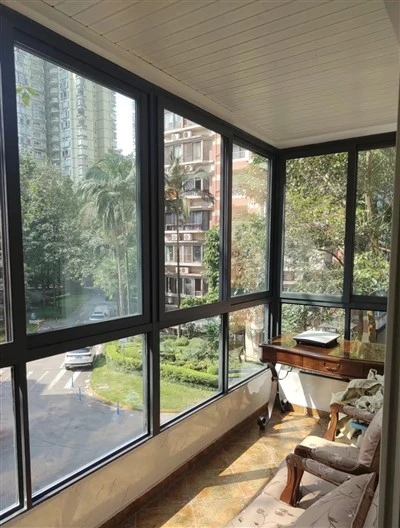
First, let’s get one thing straight: not all glass is created equal, and aluminum system windows (also called storefront or curtain wall windows for commercial and high-end residential projects) require glass that meets specific structural and performance standards. Regular single-pane glass, for example, is cheap and thin, but it’s terrible at insulating—it lets most heat escape in winter and seep in summer, driving up utility bills. It also cracks easily under temperature swings or heavy wind, which is why you won’t find it in a properly engineered aluminum window system. The glass we supply for our aluminum windows falls into several core categories, each designed to address a specific need, and each subject to rigorous quality checks before it ever leaves our warehouse.
Let’s start with insulating glass units (IGUs), the backbone of most aluminum system windows. An IGU is two or more panes of glass sealed together with a spacer in between, creating a hermetic airtight space. The gap between the panes isn’t empty, either—we fill it with argon or krypton gas, which are denser than air and slow down heat transfer far better than plain air. But the quality of an IGU depends on three key factors: the type of glass used for each pane, the seal around the spacer, and the integrity of the gas fill. If the seal fails, moisture gets trapped between the panes, leaving fog that’s impossible to clean and ruins the window’s appearance and insulating performance. We test every IGU we supply for seal integrity by putting it in a humidity chamber for 30 days before it ships; if any unit fogs up, it gets sent back, no exceptions. That’s a standard many smaller suppliers skip, but for our team, consistency is non-negotiable.
Next, the glass itself: low-emissivity (low-e) coatings. These are microscopic, invisible layers of metal oxide applied to the surface of the glass that reflect infrared (heat) light back to its source. In cold climates, a high-solar-gain low-e coating lets sunlight pass through the glass to warm a building during the day, then reflects the indoor heat back inside at night. In hot climates, a low-solar-gain low-e coating blocks most of the sun’s heat from entering the building, reducing AC costs. The quality of that low-e coating matters a lot: a cheap, poorly applied coating will scratch off easily during installation, or degrade over time, losing its effectiveness within a few years. We only work with manufacturers that apply low-e coatings in a controlled vacuum environment, which ensures the coating is uniform, durable, and doesn’t interfere with the glass’s clarity. For our aluminum system windows, we match the low-e coating to the project’s location—we’d never send a Chicago client a hot-climate low-e coating, for example, because it would waste their heating dollars in winter.
For projects that need even more performance, we offer tempered and laminated glass options. Tempered glass is four times stronger than regular annealed glass, and when it breaks, it shatters into small, pebble-like pieces instead of sharp shards, making it far safer for areas near doors, high floors, or commercial spaces with foot traffic. But not all tempered glass is the same; some suppliers cut corners by heat-treating glass unevenly, leading to spontaneous breakage. We send every batch of tempered glass to an independent lab for testing to ensure it meets ASTM safety standards before it’s used in our windows. Laminated glass is another game-changer: it’s made by sandwiching a layer of polyvinyl butyral (PVB) plastic between two panes of glass. If laminated glass breaks, the plastic holds the pieces together, so there’s no risk of glass falling out onto the street below. This makes it ideal for storefront windows, skylights, or high-rise windows that need to withstand windborne debris or impact. It also blocks up to 99% of UV rays, which is a huge plus for anyone worried about furniture fading from sunlight. We recently supplied laminated glass for a downtown hotel project in Miami, and the client specifically requested it to meet coastal wind codes—we saw firsthand how that extra layer of strength made the difference between a window that could withstand category 2 hurricane winds and one that couldn’t.
Noise reduction is another factor that the glass in aluminum system windows handles far better than standard window glass. If you’ve ever lived near a busy highway, airport, or industrial area, you know how disruptive exterior noise can be. The thickness of the glass panes, the gap between them, and even the gas fill all affect how much sound the IGU blocks. For example, if one pane is 3mm thick and the other is 5mm thick, that mismatch disrupts sound waves better than two panes of the same thickness, reducing noise by up to 5 decibels. We offer sound-dampening IGUs for urban and suburban projects, and we test each unit’s STC (Sound Transmission Class) rating to make sure it meets the client’s noise requirements. A project in Brooklyn a few years back had a home office right next to a busy subway line—they were getting 70 decibels of noise during rush hour, which is as loud as a vacuum cleaner. By swapping their old single-pane windows for our sound-dampening aluminum system windows, they brought the noise down to 40 decibels, which is as quiet as a library. That’s the kind of real-world difference quality glass makes.
But here’s something many people don’t realize: the glass’s quality doesn’t exist in a vacuum. It has to work in perfect alignment with the aluminum frame, hardware, and seals of the window system. That’s why we’re not just a glass supplier—we design our aluminum windows as a whole system, so every component is engineered to complement the others. For example, if a project needs a very large window span, we might use thicker glass to support the weight, and pair it with a reinforced aluminum frame that’s tested to carry that load without bending. If we use a low-e coating, we make sure it’s placed on the “correct” surface of the IGU—usually the second or third surface from the outside—so it doesn’t affect the glass’s clarity or effectiveness. If we use laminated glass, we adjust the spacer in the IGU to account for the extra thickness, so the window fits perfectly in the frame without gaps that would leak air or water. Too often, we see contractors buy cheap glass and pair it with an expensive aluminum frame, or vice versa, and the whole system underperforms because the components don’t work together. Our job is to make sure that never happens—we coordinate every part of the system, from the glass to the hardware, to ensure maximum performance.
Quality control is where a lot of suppliers cut corners, and that’s why so many aluminum windows have issues like fogged glass, air leaks, or poor energy performance down the line. At our facility, we have a full in-house quality control team that checks every batch of glass when it arrives, not just when it’s finished. We look for minor flaws like tiny scratches, bubbles, or uneven coating that might not be visible to the naked eye but can affect performance over time. We also run pressure tests on every finished window to make sure it can withstand wind loads, air infiltration, and water penetration—requirements that are mandatory for most building codes, but that many smaller suppliers skip to save time and money. A few years ago, we had a client come to us with a brand new building where their old supplier’s windows were leaking water during rainstorms. When we tested those windows, we found that the spacers were poorly sealed, so water was getting into the IGU and corroding the aluminum frame. We replaced all the windows with our system, and in the next heavy rain, not a single drop came inside. That’s the difference between glass quality paired with a properly engineered system and cutting corners.
Let’s also talk about long-term durability, because a window is a long-term investment—most people keep their windows for 20 to 30 years, so you don’t want to have to replace them anytime soon. High-quality glass doesn’t just perform well when it’s new; it maintains its performance for decades. A cheap low-e coating might start to degrade after 5 or 10 years, reducing energy savings by 20% or more. Poor seals in an IGU will fail in 7 to 10 years, leading to fog and lost insulation. Our glass is tested to last 25+ years, and we back that up with product warranties that reflect that confidence. We recently finished a project in Denver, where the windows are exposed to extreme temperature swings—from 100°F in summer to 10°F in winter—without any issues with fog or seal failure. That’s the result of using high-quality materials and strict testing.
I want to make something clear: this isn’t about pushing the most expensive glass on every project. We work with architects, contractors, and homeowners to match the glass quality to the project’s needs. A small residential project in a quiet suburb might not need the same heavy-duty laminated glass as a high-rise office building in a hurricane zone. But we always educate our clients on the trade-offs: a slightly higher upfront cost for better glass will pay off in lower utility bills, fewer repairs, and higher property value over time. For example, a client might hesitate at paying $500 more for a high-performance IGU, but that $500 will be recouped in energy savings in about 3 years, and the window will last twice as long as a cheaper alternative. That’s a value proposition that works for everyone.
At the end of the day, what makes the glass in aluminum system windows high quality isn’t just the materials—it’s the attention to detail, the testing, and the way every component works together. Too many people see a window as just a hole in the wall with glass in it, but for our team, it’s a system that impacts energy costs, comfort, safety, and even a building’s curb appeal. We’ve built our reputation on delivering consistent, high-performance windows that don’t just meet code—they exceed expectations. If you’re working on a project and you want to talk about the right glass quality for your aluminum system windows, I’m here to help. We can walk through your location, your needs, and the performance goals, so you get a window that works for you today and for years to come.

If you’re ready to discuss your project and find the right aluminum system window solution for your needs, don’t hesitate to reach out for a consultation and quote.
Building Curtain Wall References
- American Architectural Manufacturers Association. AAMA 101-17: Voluntary Performance Requirements for Windows, Doors, and Skylights.
- ASTM International. ASTM E2190-21: Standard Specification for Insulating Glass Unit Performance and Evaluation.
- National Fenestration Rating Council. NFRC 100-21: Procedure for Determining Fenestration Product U-factors.
- World Health Organization. Environmental Noise Guidelines for the European Region, 2018.
- Glass for the Architectural Industry. Glass Association of North America, 2022.
Huangshan City Anxin Decoration Company
We are one of the most reliable aluminum system windows manufacturers and suppliers in China. With a professional production team, we are able to meet the needs of the majority of our customers. Please feel free to wholesale customized aluminum system windows made in China here from our factory. Contact us for more details.
Address: Donglinxi Town,Xiuning County,Huangshan City,Anhui Province
E-mail: 1002501553@qq.com
WebSite: https://www.anxinfacade.com/
