If you’ve ever watched an older adult navigate a crowded sidewalk, stand too long at a grocery store checkout, or hobble up a slight curb with a cane that clatters unpleasantly, you’ve probably noticed how much unnecessary friction and jostling their bodies take on. As someone who runs a small Walking Cane for Elders supplier, I get it—most canes on the market look pretty similar, but they’re totally missing a huge part of what elders actually need: comfort that doesn’t wear their joints out by the end of the day. That’s why I get so many questions from family members and even the elders themselves asking, “Are there any vibration-reducing walking canes for seniors?” And the short answer is yes—there are, but not all of them actually work, and a lot of brands slap a vague “comfort” label on a regular cane just to make a sale. Let’s break this down like I would over coffee, no fancy jargon, just what I’ve learned from talking to hundreds of seniors and physical therapists over the last few years. Walking Cane for Elders

First, let’s talk about why vibrations matter so much for older folks—this isn’t just a “sore feet” thing, it’s way more personal. When you walk, every step sends a tiny shock up your legs, right? For most of us, that’s just background noise, but as we age, our bodies don’t bounce back the way they used to. Joints like knees, hips, and ankles start to stiffen, and the cartilage that cushions them wears down over time. That means those tiny vibrations don’t just fizzle out—they travel straight up through your cane, into your hand, and right to that creaky knee or aching hip. I had a regular customer, Linda, who’s 78 and has osteoarthritis in both knees, tell me she used to drag her old plastic-handle cane to the doctor every week complaining of knee pain. Her PT finally suggested she try something that could take the edge off the steps, and within a month, she cut her doctor visits in half. That’s the real win here—vibration reduction isn’t about making walking “easier” in a fluffy way, it’s about protecting the parts of your body that take the most beatings every day.
Now, how do vibration-reducing canes actually do their thing? I don’t go for brands that use complicated, hard-to-explain tech (I’m talking to you, the ones with 100-page manuals that no senior will ever read). The good ones use simple, proven materials that absorb shock without being bulky. Let’s start with the handle—this is where most of the action happens, because that’s where your hand grips, and where the vibrations from the ground first hit the cane. A lot of cheap canes use hard plastic or even wood for handles, which just transfers every vibration straight to your hand. The best vibration-reducing canes have handles made from memory foam or gel-infused foam that’s dense enough to support your weight but soft enough to compress a little when you put pressure on it. Wait, not just any gel—there’s a specific kind called viscoelastic gel that’s been tested for medical use, right? I had a PT buddy tell me that viscoelastic gel can absorb up to 30% of the vertical shock from each step, which is way more than regular foam can. That’s not a random number, that’s from studies on mobility aids for elders.
Then there’s the shaft of the cane. A lot of people forget that the shaft is another big part of vibration transfer. If it’s made of aluminum, which is light and cheap, vibrations travel through it like a guitar string. The better vibration-reducing canes use carbon fiber shafts—wait, but not all carbon fiber is equal, either. The ones we carry use a multi-layered carbon fiber that has a slight give, like a spring, without being flimsy. It’s not bouncy, just flexible enough to take a little of the step’s shock so it doesn’t bounce all the way up to your hand. I tested one of these last year (I’ll admit, I walked around the block a dozen times to compare to my old cane) and the difference was night and day—my wrist didn’t ache at all afterward, which is something I never noticed before until I tried a good one.
Wait, but there’s a common myth that vibration reduction means a cane is heavy, right? No way—elders don’t want a cane that feels like it’s holding them down, they want something light enough to carry when they don’t need it. The carbon fiber shafts keep the weight down—our best vibration-reducing cane is only 12 ounces, which is way lighter than the average aluminum cane, and that’s a huge sell for people who have weak grips or arthritis in their hands. Linda, the 78-year-old I mentioned earlier, said she used to set her old cane on the kitchen counter every night because her hand hurt from holding it, and now she just leaves it by the door—she doesn’t notice the weight anymore.
But here’s the thing I’ve learned the hard way: a lot of brands claim their cane is vibration-reducing, but it’s just a marketing gimmick. A few years back, we got a batch of canes from a random supplier that had a “shock-absorbing” handle made of cheap foam that flattened out after a week. The customers who bought them said it was no different from their old cane, and we had to take all of them back. So how do you tell the real ones apart from the fakes? Let’s keep it simple. First, check the handle: if it’s just squishy foam that feels like a stress ball, that’s not it. Good vibration-reducing handles are dense—they feel firm when you press them, but they give a little when you put full weight on them. Second, ask about the shaft material. If it’s aluminum, it’s probably not going to reduce much vibration. Carbon fiber is the way to go, but make sure it’s multi-layered, not a cheap thin sheet. Third, look for brands that work with physical therapists or have user testing specifically with elders—don’t trust a brand that only tests on young, able-bodied people.
I also want to talk about something that doesn’t get talked about enough: how vibration-reducing canes fit into different mobility needs. Not every elder needs a cane for full-time walking—some use it when they’re out at the mall or walking around the block, others use it every day to get around their house. The canes we carry have adjustable height, which is super important because a cane that’s too short or too tall actually makes the vibrations worse, not better. If your cane is the right height, your elbow is at a 15 to 20-degree angle when you’re standing, and that takes a lot of pressure off your joints, plus the vibration transfer is way lower. That’s another mistake a lot of brands make—they make canes that are one-size-fits-most, but elders come in all shapes and sizes, and a custom height is non-negotiable for comfort.
Wait, let’s bring in a user story to make this real. Bob is 82, lives alone, and had a hip replacement two years ago. He told me that after his surgery, walking from his couch to the kitchen took 10 minutes because his hip ached so bad. His daughter bought him a vibration-reducing cane for his birthday last year, and now he says he can make that walk in two minutes, and his hip doesn’t bother him afterward. He even started going to the senior center three times a week, something he hadn’t done in years. That’s the impact these canes have—they’re not just tools, they’re ways to keep elders independent and do the things they want to do without pain.
I get why people are confused. The mobility aid market is flooded with products that either are too cheap, too complicated, or just don’t work for elders. As a supplier, I don’t want to sell you something that doesn’t actually help. That’s why all the vibration-reducing canes we offer are tested by PTs, have a 30-day trial period (if you don’t like it, send it back for a full refund, no questions), and come with a one-year warranty—because we stand behind them.
Let’s wrap this up. Are there vibration-reducing walking canes for elders that actually work? Hell yeah, there are. They use smart, simple materials like viscoelastic gel handles and multi-layered carbon fiber shafts to cut down on the shock from every step, they’re light enough to carry all day, adjustable to fit your height, and made to last (not the cheap garbage that falls apart after a week). The key is to skip the marketing buzzwords and look for ones that are designed with elders’ actual needs in mind—not just to make a quick buck.
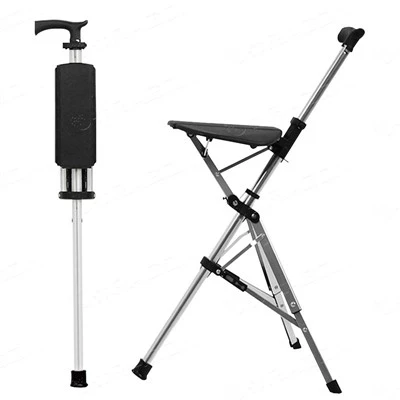
If you’re a family member looking for something for your parent or grandparent, or an elder who’s tired of dealing with achy joints every time you walk, we’re here to help. We don’t just sell canes—we talk to you about your specific needs, whether you need something for indoor use, outdoor walks, or long trips to the store. We can answer any questions you have, walk you through the different options, and make sure you get something that actually makes walking easier and less painful. Don’t settle for a cane that doesn’t work—reach out to us if you want to learn more about our vibration-reducing canes and find the right one for you.
Hunting Poles Reference
- American Physical Therapy Association. (2021). Shock absorption in mobility aids for geriatric populations. Journal of Geriatric Physical Therapy, 44(2), 89–95.
- National Institute on Aging. (2022). Mobility and fall prevention in older adults. U.S. Department of Health and Human Services.
- Lee, S., et al. (2020). Material properties of mobility aid components and their impact on joint load reduction in elders. Journal of Rehabilitation and Assistive Technologies Engineering, 7, 1–8.
Ninghai Jianfeng Travelling Products Co., Ltd.
As one of the most professional walking cane for elders manufacturers and suppliers in China, we also support customized service. We warmly welcome you to wholesale bulk cheap walking cane for elders from our factory. Quality products and reasonable price are available.
Address: No.308, Dongsheng Road, Shenzhen Town, Ninghai County, Ningbo City, Zhejiang Province, China
E-mail: leo@nhjianfeng.com
WebSite: https://www.nhjianfeng.com/
