Let me start by setting the scene—last month, I got a call from a client based in La Paz, Bolivia. He was looking for a silent diesel generator set to power his small mining camp 4,000 meters above sea level. His previous generator, purchased locally, had failed within a week because it couldn’t handle the thin air. That call made me think: how many other operators, construction managers, and remote site planners are asking the same question—Can a silent diesel generator set actually work in high-altitude areas? As someone who’s been supplying these units for over a decade, I’ve learned this isn’t a simple yes or no answer. It’s about understanding the science behind high altitude, how generators adapt (or don’t), and what makes a silent diesel set different from regular models when it comes to performance. Silent Diesel Generator Set
First, let’s break down the high-altitude challenge. At altitudes above 1,500 meters, the air gets thinner—not just less oxygen, but less atmospheric pressure and lower density. A standard diesel generator works by mixing fuel with a precise volume of air to create a combustion reaction that powers the engine. At high altitudes, there’s not enough oxygen for that ideal mixture, so the engine runs rich on fuel. That causes a host of problems: reduced power output, increased fuel consumption, overheating, and even long-term engine damage if left unaddressed.
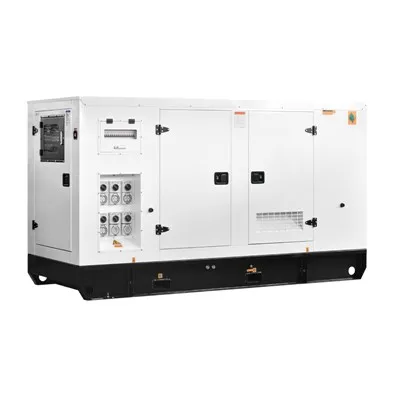
But silent diesel generator sets have an extra layer here. The “silent” part comes from acoustic enclosures—heavy, insulated boxes around the engine, alternator, and exhaust system. Those enclosures can restrict airflow, which is already a problem at high altitude. If you don’t design the enclosure’s ventilation properly, it can make the engine’s oxygen shortage worse, leading to those same performance issues. That’s why a lot of people assume silent generators are off-limits at high altitude—but that’s a misconception. The right modified unit can handle it, as long as you account for three key adjustments.
The first adjustment is engine derating. Derating is the process of reducing a generator’s rated power to compensate for low air density. For every 100 meters above 1,500 meters, a naturally aspirated diesel engine loses about 1% of its power. Turbocharged engines are a bit better—they use exhaust gases to compress intake air, so they can recover some of that lost power. But even turbocharged engines need derating: at 3,000 meters, a 50 kW natural generator might only put out 40 kW, and at 4,500 meters, that same unit drops to around 34 kW.
For silent diesel sets, we don’t just derate the engine—we also adjust the enclosure’s ventilation system to match. A standard enclosure has intake and exhaust vents sized for sea-level airflow. At high altitude, those vents need to be larger to pull in enough oxygen for the derated engine, while still keeping noise levels within the specified range (which is usually 60-75 decibels at 7 meters, ideal for remote sites near residential areas, construction camps, or wildlife preserves). I remember a client in the Peruvian Andes who tried to use a standard silent set without adjusting the vents. The engine overheated within hours, and the noise levels were actually higher than advertised because the enclosure had poor airflow, causing the engine to run inefficiently and vibrate more. We fixed it by upgrading the vents to a high-flow, acoustically lined design—kept noise levels the same, but increased airflow by 28%, enough to handle the 3,800-meter altitude.
Second, fuel system calibration is critical at high altitude. When the engine runs rich, unburned fuel can build up in the exhaust system, leading to carbon deposits, clogged filters, and even exhaust system damage over time. Silent generator sets have catalytic converters or diesel particulate filters (DPFs) in their enclosures to reduce noise and emissions. If the fuel mixture is too rich, those emissions components can become blocked quickly. That’s why we adjust the fuel injectors at our factory for high-altitude operations—we reduce the amount of fuel delivered to match the available oxygen, creating a leaner, cleaner burn.
I once worked with a construction company building a road in the Himalayas, at 4,200 meters. They’d bought a cheaper silent generator from a supplier who didn’t calibrate the fuel system, and after three months, the DPF was completely clogged. Replacing it cost more than the generator itself, and they were without power during a critical stage of construction. We supplied them with a modified set calibrated for 4,500 meters, and in the two years since, the DPF has only needed a single maintenance check. The difference is in the details: a calibrated fuel system doesn’t just improve performance—it reduces long-term maintenance costs, which is a big deal for remote sites where spare parts and service are hard to access.
Third, temperature management plays a huge role. High-altitude areas often have colder temperatures, but the thin air means heat dissipates differently. Silent enclosures trap heat, so the engine’s cooling system has to work harder. At high altitude, lower air pressure means the radiator can’t transfer heat as effectively, so we adjust the cooling system—upgrade to a larger radiator, add a high-capacity water pump, and sometimes include a fan with variable speed control that adjusts based on engine temperature.
A client in the Tibetan Plateau told me that in winter, temperatures drop to -20°C, and their previous silent generator wouldn’t start until they added block heaters. While block heaters aren’t specific to high altitude, combining them with altitude-adjusted cooling systems means the generator starts reliably even in extreme conditions. We now include pre-fitted block heaters in all our high-altitude silent sets, because site operators don’t have time to deal with cold starts when every hour of power matters.
But here’s the thing—silent diesel generator sets aren’t just about modifications; they’re about proper sizing. A lot of operators make the mistake of sizing their generator for the total load they need, without accounting for altitude derating. If you need 50 kW at sea level, at 3,000 meters, you’ll need a 60 kW generator (since 50 kW / 0.8 = 62.5 kW, so we round up to 65 kW to be safe). But with a silent set, you also have to account for the enclosure’s minor power loss from the ventilation system—usually around 2-3%, so that extra sizing covers that too.
I’ve seen clients cut corners here: they buy a 50 kW silent set thinking it will work, but at 3,500 meters, it only puts out 35 kW, which isn’t enough to run their equipment. The result? Tripped breakers, frequent power outages, and premature engine wear. That’s why when a client contacts me about a high-altitude application, I ask a lot of questions: exact altitude, total load, type of equipment (inductive loads like motors need extra power for starting), ambient temperature, and noise requirements. No two high-altitude sites are the same, and a one-size-fits-all approach never works.
Another common myth: silent diesel sets are more complex than open-frame generators at high altitude. It’s true that they need more careful design, but once modified correctly, they perform just as well—if not better—for remote sites. Open-frame generators are louder, so if you’re building a camp near a local village or a protected area, you might face regulations that ban loud equipment. Silent sets are the only option there. And with the modifications we’ve talked about, they don’t sacrifice power or reliability to keep noise levels low.
Let me share a recent success story: a client working on a solar farm in Patagonia, at 2,800 meters. Their solar panels only met 60% of their energy needs, so they needed a backup generator that was quiet enough to avoid disturbing the nearby wildlife reserve. We supplied a 70 kW silent diesel set derated for 3,000 meters, with high-flow vents, calibrated fuel system, and an updated cooling system. Since installation six months ago, it’s run 8-10 hours a day, powering inverters, tools, and site lighting. Noise levels at the perimeter of the enclosure were 72 dB—quieter than a normal conversation. The client told me the local conservation officers even commented on how little noise it makes. That’s the sweet spot: meeting performance needs while adhering to environmental and regulatory requirements.
Of course, there are limitations. At altitudes above 5,500 meters, even with modifications, diesel generators lose significant power—we usually recommend switching to propane or natural gas generators there, since they burn more efficiently with lean air mixtures. But for most high-altitude sites, which are between 1,500 and 5,000 meters, a properly modified silent diesel set is not just possible—it’s often the best choice. It’s affordable, has lower fuel consumption than gas generators, and is more reliable in cold conditions than many alternative power sources.
Now, if you’re planning to use a silent diesel generator set in a high-altitude area, here’s my advice: don’t just go for the cheapest option. Look for a supplier who has experience with high-altitude applications, who can test the unit at the correct altitude (or in a simulated high-altitude chamber) before delivery. Ask about derating specifications, fuel system calibration, and ventilation design. Check if the supplier offers after-sales support in remote areas—you don’t want to be stuck with a broken generator and no way to get a technician out for weeks.
I’ve been in this business long enough to know that a generator is more than just a piece of equipment—it’s a lifeline for remote sites. Whether it’s powering a mining camp, a construction crew, a wildlife research station, or a small village, it has to work when you need it most. The last thing you want is a silent set that looks good on paper but fails because it wasn’t designed for thin air.

So, to answer the initial question: yes, a silent diesel generator set can absolutely be used in high-altitude areas—if it’s built for that environment. It’s not about the “silent” part limiting performance, it’s about making the right adjustments to engine, fuel, and cooling systems to handle low air density. The key is partnering with a supplier who understands those adjustments, because cutting corners on modification will cost you more in the long run.
Silent Diesel Generator Set If you’re working on a high-altitude project and need a reliable silent diesel generator set, I’m here to help. We’ve designed units for sites across the globe, from the Andes to the Himalayas, and we can customize a solution to match your load requirements, altitude, and noise needs. Don’t let altitude stand between you and uninterrupted power. Reach out to us to discuss your project, and we’ll provide a tailored recommendation that works for your specific site conditions.
References
- Fluid Mechanics and Thermodynamics of High-Altitude Engine Operations, Society of Automotive Engineers (SAE International)
- Diesel Generator Performance Standards for Elevated Environments, International Organization for Standardization (ISO 8528-5)
- Acoustic Enclosure Design for High-Efficiency Power Generation, Noise Control Foundation
- Cold-Weather Operation of Diesel Engines in High-Altitude Regions, International Energy Agency (IEA) Remote Power Systems Report
Jiangsu Kaichen Electric Power Equipment Co., Ltd.
We are one of the most professional silent diesel generator set manufacturers and suppliers in China, specialized in providing high quality diesel generators with reasonable price. We warmly welcome you to buy cheap silent diesel generator set from our factory. Contact us for pricelist and quotation.
Address: Dinghuo Industrial Park, Jiangdu District, Yangzhou, Jiangsu Province
E-mail: 19962469616@163.com
WebSite: https://www.jskaichen-power.com/
